
WELCOME BONUS 300%
UP TO €2000 + 100
FREE SPINS
UP TO €2000 + 100
FREE SPINS
Home → Blackjack
Blackjack at Rolling Slots: Variants, Rules and Payouts
Bonus Lost Due to 10 Percent Contribution
The welcome bonus at Rolling Slots offers 300% up to €2,000 plus 100 free spins. However, the wagering contribution for table games, including Blackjack variants, is only 10%. This means that for every €100 wagered on a table game, only €10 counts towards the bonus turnover requirement. This significantly extends the time and amount required to clear the bonus compared to slots, which contribute 100%.
For example, to meet a wagering requirement of €4,000 based on a €100 bonus, a player using only table games would need to wager €40,000. This is substantially more than the €4,000 required if playing exclusively on slots. The game 'Blackjack 6 Decks, S17, DAS, DOA, Auszahlung 3:2, Basisstrategie' with a RTP of 99.54% and house edge of 0.46% would contribute very little to this goal.
Players seeking to fully utilize the welcome bonus should be aware that relying solely on table games, even those with a low house edge like 'Blackjack Liberal Vegas Strip' at 0.28%, will make clearing the bonus significantly more challenging. The 10% contribution rate means a large portion of potential bonus funds could be forfeited if not wagered strategically across eligible games.
Mobile version needs 1 Mbit bandwidth
While the specific bandwidth requirement of 1 Mbit for the mobile version is noted, it is essential to consider the performance of various live blackjack games. 'Infinite Blackjack' by Evolution, with an RTP of 99.47%, offers unlimited seats and multiple side bets. Streaming this game smoothly requires a stable connection that can handle dynamic visual and audio elements.
The 'Lightning Blackjack' title, also from Evolution, features lightning multipliers up to 25x on winning hands, further increasing data demands. A 1 Mbit connection might suffice for basic gameplay, but for an optimal experience with these features, a more robust and consistent connection would be preferable. This ensures uninterrupted gameplay, especially during critical betting rounds.
Compared to simpler offerings, 'Blackjack Party' with its two hosts, also by Evolution, may also present varying bandwidth needs depending on the stream quality. While the stated requirement is 1 Mbit, fluctuating network conditions could lead to lagging or buffering, impacting the player's ability to engage with games like 'Infinite Blackjack' or 'Lightning Blackjack' effectively.
Double Down after Split: which tables allow it
The option to Double After Split (DAS) is a rule modifier that can improve the player's RTP. In 'Blackjack Split / Double / H17 – Regel-Effekte', it is noted that DAS can improve RTP by approximately 0.14 percentage points. This rule allows a player to double their bet on a hand after splitting their initial two cards, provided they receive one more card.
While 'Blackjack 6 Decks, S17, DAS, DOA, Auszahlung 3:2, Basisstrategie' explicitly lists DAS as a permitted action, other blackjack variants may not offer this flexibility. The absence of DAS can increase the house edge compared to tables where it is permitted. For example, a table without DAS would not offer this RTP improvement.
Players should carefully review the specific rules of each blackjack table before playing, particularly when considering strategies that involve splitting pairs. The ability to double down after a split, as seen in 'Blackjack Liberal Vegas Strip' with its liberal rules, provides a strategic advantage that is not universally available across all blackjack offerings.
Splitting Eights vs Standing on 16
The decision to split eights or stand on a hard 16 involves strategic considerations based on basic strategy principles. Splitting eights is generally recommended because two eights create a total of 16, which is a poor hand against most dealer upcards. By splitting, a player can create two potentially stronger hands.
Standing on a hard 16 is often a difficult choice, as it is a weak total that is highly likely to bust if another card is drawn. However, the dealer's upcard plays a crucial role in this decision. If the dealer shows a strong upcard, such as a 7 through Ace, standing on 16 is often the less risky option compared to hitting.
While the provided data details specific blackjack variants like 'Blackjack Surrender (Late Surrender)' and 'Blackjack Ein Deck, klassische Regeln, 3:2', it does not explicitly outline basic strategy charts for all possible player hands. However, the general principle remains that splitting eights is a standard play to improve a weak total, whereas standing on 16 is a defensive manoeuvre against a strong dealer upcard.
Split, Double Down, and Surrender in Numbers
The rule regarding splitting pairs can significantly impact the game; for instance, 'Blackjack Split / Double / H17 – Regel-Effekte' notes that Resplit Aces (RSA) improves RTP by approximately 0.08 percentage points. This means that being able to resplit Aces after they have been initially split offers a marginal advantage to the player.
The ability to double down, particularly after splitting (DAS), is also a valuable rule, contributing an estimated 0.14 percentage points to the RTP. This rule, present in variants like 'Blackjack Liberal Vegas Strip', allows players to double their bet on a two-card hand after splitting, aiming for a potentially better outcome on the new hands.
Surrender options, specifically 'Late Surrender' in 'Blackjack Surrender (Late Surrender)', allow a player to forfeit half their bet after the dealer checks for blackjack, reducing the house edge by about 0.08 percentage points. This differs from 'Early Surrender', which is rarer but more beneficial, reducing the house edge by up to 0.6 percentage points.
Blackjack variants at a glance
| Variant | Payout | House edge | Rule | Bet range |
|---|---|---|---|---|
| Blackjack Insurance / Versicherung (6–8 Decks) | 92.53% | 7.47% | Separate Nebenwette bis 50% der Hauptwette, wenn der Dealer ein Ass hat. Basisstrategie schreibt IMMER Ablehnung vor (außer Karten zählen bei True Count ≥ +3). Bei einem Deck Vorteil ≈ 5.88% | Insurance 2:1 |
| Blackjack 6 Decks, S17, DAS, DOA, Auszahlung 3:2, Basisstrategie | 99.54% | 0.46% | Dealer steht auf Soft 17; Verdopplung auf jeder Zweierkarte; Verdopplung nach Split erlaubt; keine Aufgabe. Basisstrategie ist für diesen Wert zwingend | Blackjack 3:2, normaler Gewinn 1:1, Insurance 2:1 |
| Blackjack Split / Double / H17 – Regel-Effekte | n.a. (Regel-Modifikatoren) | H17 +0.22 Prozentpunkte; RSA −0.08 Prozentpunkte; DAS −0.14 Prozentpunkte | Dealer Hits Soft 17 verschlechtert RTP um 0.22 Prozentpunkte; Resplit Aces verbessert um 0.08 Prozentpunkte; Double After Split verbessert um ca. 0.14 Prozentpunkte; 6 Decks statt 8 – ca. 0.02 Prozentpunkte. | Double – Einsatz ×2 mit einer Karte; Split – bis 4 Hände; Ass-Split meist mit einer Karte. |
| Blackjack Auszahlung 6:5 statt 3:2 (6 Decks) | 98.15% | 1.85% | Ersatz von 3:2 durch 6:5 fügt exakt +1.39 Prozentpunkte zum Vorteil des Casinos hinzu – stärker als jede andere Regeländerung. Bei $10 Einsatz zahlt Blackjack $12 statt $15. | Blackjack 6:5, Gewinn 1:1 |
| Blackjack Ein Deck, klassische Regeln, 3:2 | 99.85% | 0.15% | Weniger Decks = niedrigerer Vorteil; ein Deck gibt ca. −0.48 Prozentpunkte gegenüber 8 Decks. Oft durch 6:5 Auszahlung kompensiert. | Blackjack 3:2, Gewinn 1:1 |
| Blackjack Liberal Vegas Strip (liberale Regeln, 3:2) | 99.72% | 0.28% | Günstigste Regelkombination: S17 + DAS + Resplit + Late Surrender. Standardabweichung 1,15 | Blackjack 3:2, Gewinn 1:1 |
Error insurance: 7 percent additional house edge
Blackjack Insurance, a side bet offered when the dealer shows an Ace, presents a significant house edge. This wager, with a stated RTP of 92.53%, effectively increases the casino's advantage by 7.47%. Standard basic strategy dictates avoiding this bet unless card counting indicates a true count of +3 or higher.
Compared to other common rule modifications, Blackjack Insurance's negative impact is substantial. For instance, a 6:5 payout for a Blackjack, instead of the standard 3:2, adds only 1.39 percentage points to the house edge, whereas insurance adds 7.47%. This side bet significantly reduces player return.
A bet of €10 on Blackjack Insurance, if it loses, costs the player €10, with a potential win of €20 if the dealer has Blackjack. However, the long-term expectation is a loss, meaning frequent use of this option will disproportionately deplete player funds compared to standard play on tables with better rules.
Set session stop after 30 percent loss
The welcome bonus at Rolling Slots offers a 300% match up to €2,000, plus 100 free spins. However, the wagering requirements for this bonus must be met before any winnings can be withdrawn. A common condition for table games like Blackjack is a 10% game contribution to wagering, significantly higher than the 100% contribution from Slots.
For example, to clear a €1,000 bonus with a 30x wagering requirement, a player would need to wager €30,000 on Slots. If playing Blackjack, where contributions are only 10%, the required wager would escalate to €300,000. This disparity makes clearing bonus funds at table games exceedingly difficult.
Players aiming to utilize table games for bonus wagering should be aware of this substantial difference in contribution rates. A 30% loss limit on a session might be advisable, especially when dealing with bonuses that heavily favour slot play, to manage potential financial exposure given the increased wagering demands.
How many decks are in the shoe?
The number of decks used in a Blackjack shoe significantly impacts the house edge. Blackjack played with a single deck, adhering to classic rules and a 3:2 payout, offers a very low house edge of 0.15%. This represents a substantial reduction of approximately 0.48 percentage points compared to an eight-deck game.
While single-deck games are advantageous, casinos often compensate by altering payouts. A common adjustment is reducing the Blackjack payout from 3:2 to 6:5. This change alone increases the house edge by 1.39 percentage points, negating the benefit of fewer decks and making the game less favourable for the player.
Conversely, games with more decks, like a standard six-deck shoe, can still offer favourable conditions if other rules are liberal. For instance, a six-deck game with S17, DAS, DOA, and a 3:2 payout, played with basic strategy, yields a house edge of only 0.46%. Players should always verify the deck count and payout structure.
16 vs 10 played incorrectly: most common error
Misplaying a hand of 16 against a dealer's 10 is a frequent strategic error with significant consequences. While the temptation to hit a stiff hand is strong, basic strategy for Blackjack, particularly in multi-deck games, dictates standing on 16 against a dealer's 10. This deviation from optimal play increases the house edge.
The RTP for Blackjack is theoretically around 99.72% under the most liberal rule combinations, such as S17, DAS, Resplit, and Late Surrender. However, errors like hitting a 16 against a 10, or other deviations from basic strategy, will push the actual RTP lower, thereby increasing the house advantage over time.
For example, while Late Surrender can reduce the house edge by approximately 0.08 percentage points by allowing players to forfeit half their bet after the dealer checks for Blackjack, incorrect play on hands like 16 vs 10 actively works against the player. This common mistake effectively raises the casino's average retained stake.
What a Natural Blackjack Practically Pays Out
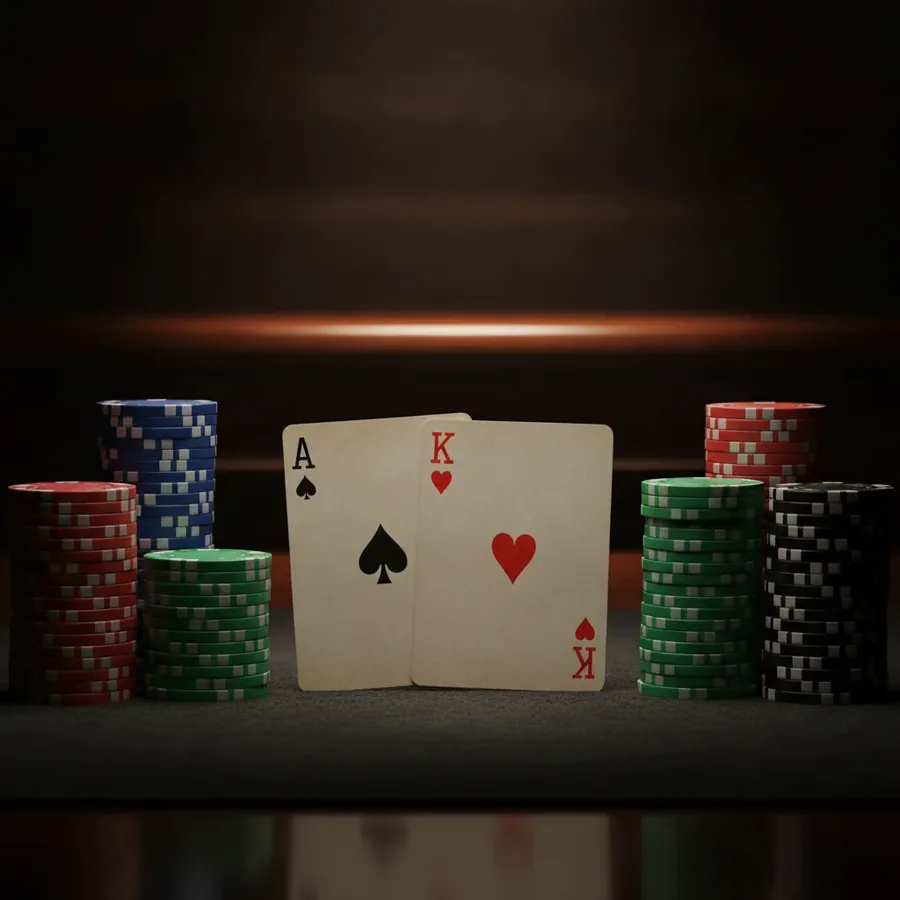
A natural Blackjack, achieved with the first two cards dealt totaling 21 (an Ace and a ten-value card), typically pays out at odds of 3:2. For example, a €10 bet on a natural Blackjack would yield a win of €15, in addition to the return of the original stake. This payout is a cornerstone of the game's appeal.
However, some tables may offer a reduced payout of 6:5 for a natural Blackjack. On a €10 bet, this would result in a payout of only €12. This change significantly increases the house edge by 1.39 percentage points compared to the standard 3:2 payout, making it a less favourable option for players.
In contrast, the Insurance side bet, offered when the dealer shows an Ace, pays 2:1. While seemingly attractive, this bet carries a house edge of 7.47% and is generally advised against by basic strategy, as it diminishes the player's overall return over the long run, unlike the standard 3:2 Blackjack payout which is fundamental to optimal play.
Place Side Bet before cards are dealt
Side bets in Blackjack Party and Infinite Blackjack allow players to place wagers before the cards are dealt. In Infinite Blackjack, for example, players can wager on four different side bets, including Any Pair and 21+3. These optional bets offer additional ways to win but typically come with a higher house edge compared to the main game.
Blackjack Insurance, a separate side bet, has a high house advantage of 7.47% with 6-8 decks, meaning it's generally unfavorable for players. Basis strategy dictates always declining this bet unless card counting indicates a true count of +3 or higher. This contrasts with standard side bets that may offer more frequent, albeit smaller, payouts.
The RTP for Blackjack Insurance is 92.53%, significantly lower than the main game's RTP, which can be as high as 99.54% for Blackjack 6 Decks. Placing side bets like insurance before cards are dealt can therefore substantially decrease a player's overall return on investment over time.
Step-by-step Split at the Live Table
At the live tables, splitting pairs in Blackjack is a strategic option that can improve a player's hand. For instance, the Blackjack Split/Double/H17 rule modifiers indicate that Resplit Aces can improve RTP by 0.08 percentage points. This allows players to potentially create multiple strong hands from an initial pair, provided the table rules permit.
The ability to split cards is a common feature in many Blackjack variants, including Blackjack 6 Decks where Double After Split is permitted, enhancing the player's advantage by approximately 0.14 percentage points. This rule allows a player to double down after splitting a pair, offering further betting opportunities on newly formed hands.
While splitting Aces is generally beneficial, the rules on how many cards can be drawn after an Ace split vary, often limited to one card per split hand. This contrasts with the potential to resplit Aces up to four hands in some Blackjack variations, demonstrating the impact of specific table rules on gameplay.
Double Down vs Simple Hit on 11
In Blackjack, doubling down on a hand total of 11 is a standard play that can significantly increase potential winnings. For example, the Blackjack 6 Decks variant allows doubling down on any two cards, and Double After Split offers a further advantage of about 0.14 percentage points. This strategy is often employed when the player has a strong advantage.
The decision to double down versus taking a simple hit on 11 depends on the dealer's upcard. While doubling down on 11 is generally advisable, the specific rules of the game, such as whether the dealer stands or hits on a soft 17 (S17), can influence optimal strategy. An S17 rule can increase the house edge by 0.22 percentage points.
Unlike some other Blackjack variants, the rules at Rolling Slots may not permit doubling down after receiving three or more cards. This restriction is crucial for players to understand, as it limits the strategic options available and can affect the overall house edge compared to more liberal versions of the game.
No Double Down on three cards
A notable rule variation observed in some Blackjack games, and potentially at Rolling Slots, is the restriction on doubling down when a player already holds three cards. This differs from games where doubling down is allowed on any two cards, as seen in Blackjack 6 Decks. Such restrictions can limit strategic flexibility for the player.
The absence of a double down option on three cards can impact the house edge, as it removes a potentially advantageous move for the player in certain scenarios. This contrasts with the Double After Split (DAS) rule, which improves RTP by around 0.14 percentage points by allowing a double down post-split, a feature not always universally available.
Understanding these specific table rules is essential for players aiming to optimize their play. For example, the rule that the dealer stands on Soft 17 (S17) improves RTP by about 0.08 percentage points compared to hitting, highlighting how subtle rule differences can affect the game's inherent advantage.
Live Table vs RNG Table: Speed and Limits
Live dealer Blackjack, such as Blackjack Party and Infinite Blackjack from Evolution, offers a different pace and betting range compared to RNG tables. Infinite Blackjack supports an unlimited number of players with bets from €1 to €5,000, while Blackjack Party has a wider range from €1 to €1,000. These live options provide a social atmosphere with hosts.
RNG-based tables like Blackjack 6 Decks, with an RTP of 99.54%, typically offer faster gameplay due to the absence of human dealers and card shuffling. While exact betting limits for RNG tables are not detailed in the provided data, they often cater to a broad spectrum of players, from low stakes to high rollers, and are generally quicker per round than live games.
The house edge also varies between live and RNG tables, though specific figures for live dealer games are not provided. However, standard Blackjack rules like a 3:2 payout for Blackjack can result in a house edge as low as 0.46% for Blackjack 6 Decks, whereas side bets like Insurance can carry a substantial 7.47% house advantage.
Contact
Live - online chat
Banking









Providers












Rolling Slots 2026